

Overview
Docket launches a single persistent remote screen that stays active as you create and edit tests. For web tests this is a browser; for mobile tests it’s an iOS simulator or Android emulator. In both cases the screen is embedded in the side panel and automatically stays in sync with your current test configuration.Start Screen launcher
Start Screen is a split button: the main half launches with the displayed device; the caret opens a picker grouped by Browser / iOS / Android, with per-resolution entries and inline app selection on mobile. The default mirrors the test you’re viewing, so the typical flow is: open a test → click Start Screen.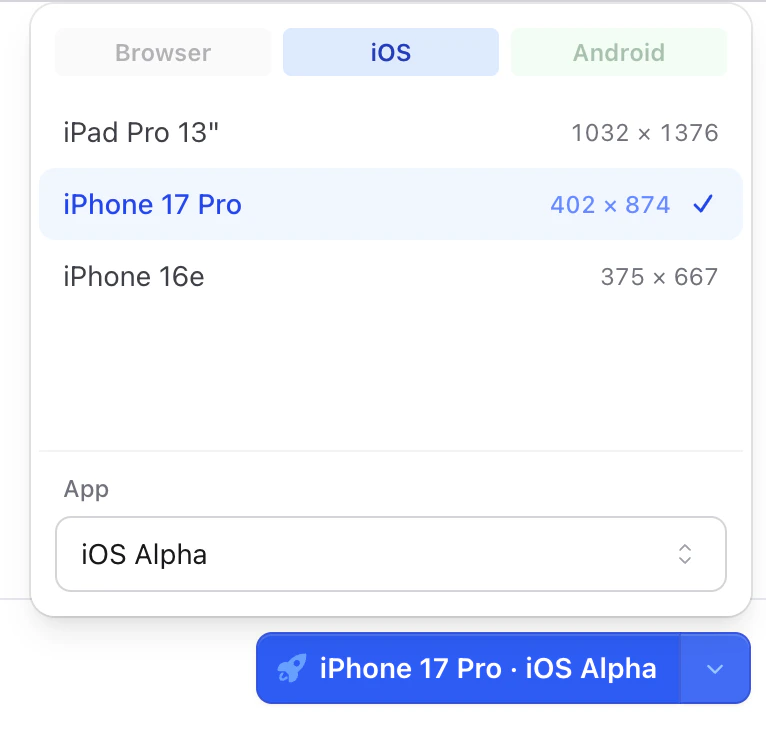
- Single active tab: one tab at a time. Other tabs see the screen as “busy” and can take it over.
- Persistent session: the screen survives test switches. Variables, files, rules, and login session auto-sync as you navigate.
- Config changes need a restart: viewport, zoom, device, app, or entrypoint URL changes trigger the Screen Out of Sync flow.
Controls
When the screen is launched and you’re viewing a test, you’ll see several control options in the bottom bar: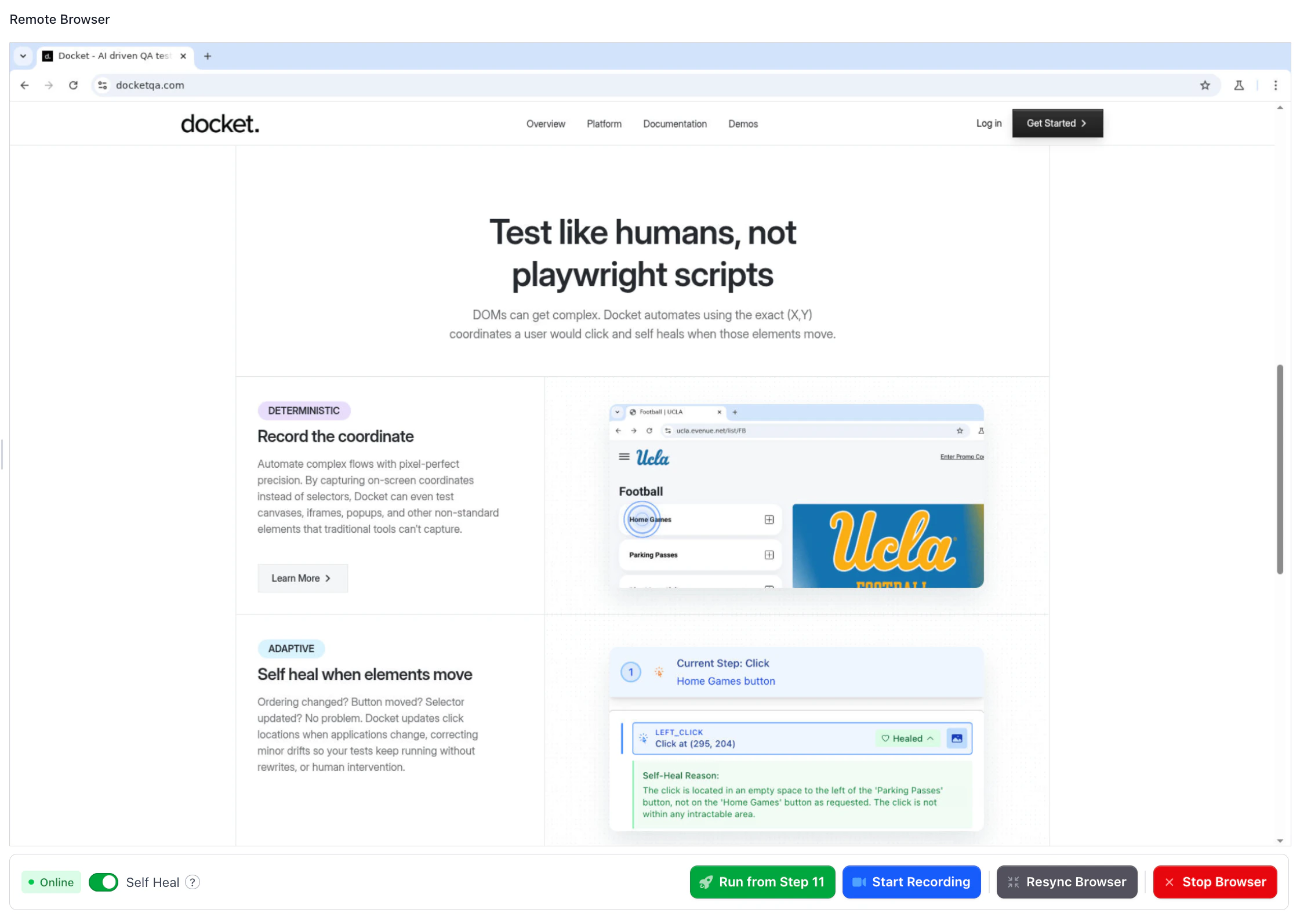
Status Badge
Shows the current state of the instance. The screen cycles through several states:- Offline: Not started
- Starting: Instance is starting up
- Online: Ready for execution or recording
- Recording: Ready for interaction. All events are captured and created in the step recorder. Cannot execute steps while recording
- Executing: Playing back steps. Cannot record during execution
- Stopping: Instance was stopped and will go offline
Self Heal Toggle
Controls how recorded steps replay during test execution.- Enabled (default): Before replaying each recorded step, Docket performs a check to see if the element is still available at the saved coordinates. If the check passes, the step executes normally. If the element has moved or is unavailable, the agent self-heals by locating it using the step description and action
- Disabled: The agent will directly replay from the exact saved coordinates without performing any checks or attempting to adapt
Run from Step
Executes your test starting from the currently selected step (highlighted in blue) and continues through subsequent steps in sequence. The execution respects the Self Heal toggle setting.Start Recording
Enables recording mode where you can interact with the embedded screen and Docket will automatically capture and cache your actions. This is the primary way to create recorded steps.Resync
Opens the resync dialog to re-push the test’s configuration to the running screen. For web tests:- Navigate to URL: navigate the browser to the test’s entrypoint URL.
- Restart browser: restart the browser to apply viewport, zoom, and tunnel changes.
- Restart app: relaunch the active build on the simulator/emulator. The app is not reinstalled and the device is not restarted.